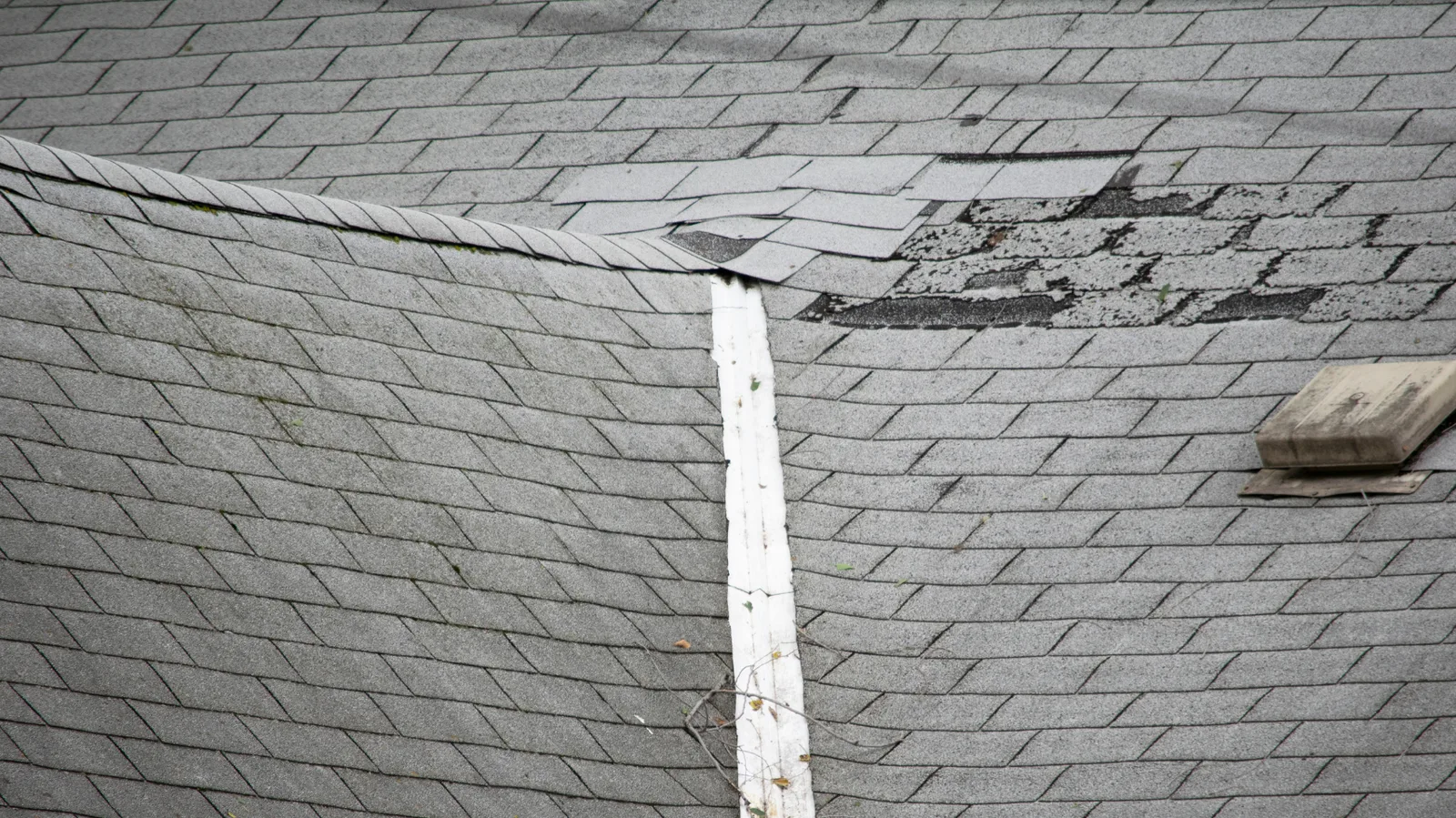
Lifted or creased shingles
Wind can lift a tab, break its seal or crease the material. The exposed area and the surrounding shingles need examination before choosing an individual replacement.
Hail or strong wind can leave roof damage that is hard to judge from the yard. Request a free inspection and discuss what the roof actually needs.
After a storm, a shingle in the yard or a new ceiling stain gives you a reason to check the roof. It does not by itself establish the full extent of damage or whether replacement is needed. An inspection can help connect visible changes to the roof details involved.
Keep the physical roof decision separate from the claim decision. The work scope follows the observed condition. An insurer applies the policy to the reported loss. Nearby hail reports and damage to another house do not settle either question for your property.

Wind can lift a tab, break its seal or crease the material. The exposed area and the surrounding shingles need examination before choosing an individual replacement.
An impact may affect the shingle surface or underlying reinforcement. Marks on gutters or other surfaces can provide context, but do not automatically establish roof damage.
Roof-edge metal, ridge pieces and flashing can move or open during severe weather. Those details may create a water entry point even when much of the field looks unchanged.
Use ground-level photos and indoor observations. Keep clear of downed lines, unstable debris, sagging ceilings and wet electrical areas.
Note the date, what you saw and where water appeared. Keep receipts for temporary protection and records of previous repairs.
If you are considering a claim, ask the insurer about deadlines, required evidence and coverage terms. A roofing contractor can describe roof work; it does not act as your adjuster on the same project.
No storm date or hail-size number establishes this decision without the roof condition.
Our nearby storm archive lists NOAA hail and thunderstorm wind reports within a stated radius and time period. It can help you find reported weather near Forney, but reporting is incomplete and point locations are not property damage footprints.
For policy and contractor-selection questions, review the Texas Department of Insurance guidance and read the actual terms of your policy.
A leak may become visible in a later rain or after water has moved through hidden materials. Timing is useful information, but it does not prove the cause or insurance coverage. Keep dated observations and request an inspection.
A ground view can miss small details and concealed slopes. If you have a reason for concern, request a free inspection rather than climbing onto the roof yourself.
No. Texas prohibits a contractor from offering to waive, rebate or absorb a property insurance deductible. Read more about Texas deductible rules and the separate roles in a claim.
Tell us when the storm occurred and what changed at the property. Request a free inspection to discuss the roof condition.