Investigate moisture
Ask how the extent of suspected wet material will be evaluated and what the proposal assumes. A dry-looking membrane does not establish dry insulation below it.
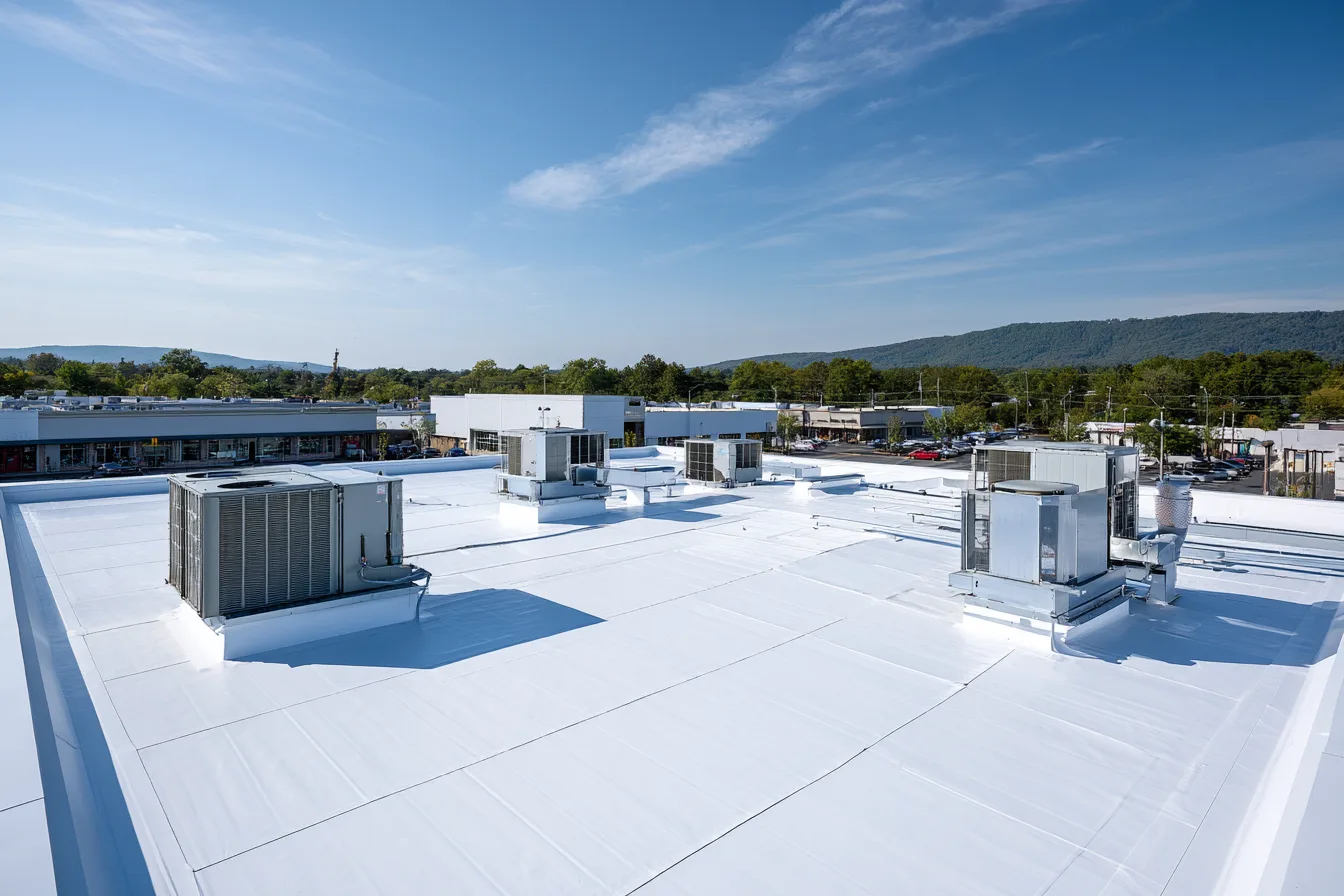
A recurring leak, an aging membrane or a roof budget to plan? Forney Roofing Co helps you start with the condition of the building. Request a free roof inspection.
A commercial roof decision affects more than the surface above the ceiling. The building may need to remain occupied, equipment may need regular access, and a leak can travel through insulation before it appears inside. The first conversation should identify the roof system, the building use and the problem that needs attention.
Forney includes small industrial and service properties as well as larger distribution buildings. Those are different operating environments, not a reason to apply one membrane or maintenance schedule to every roof. Share the affected area, roof records and access limitations so the scope can be considered in context.
Forney’s economic development property overview describes that local mix. Individual roof condition still needs to be established at the property.
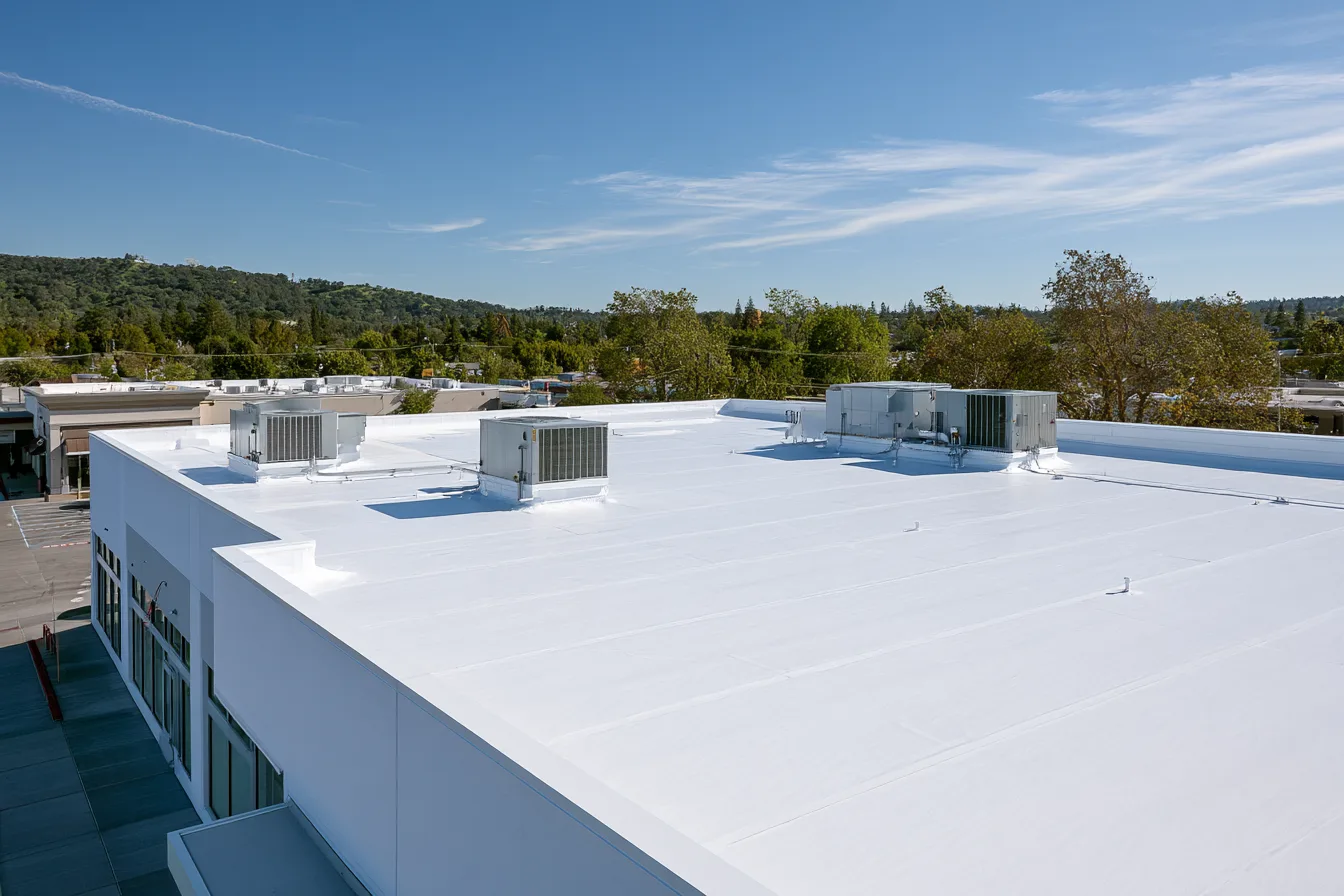
The right investment depends on the existing assembly. A coating should not conceal wet insulation, and a full replacement should not be assumed from one isolated leak.
Trace the leak and address the failed detail with materials suited to the existing system.
Plan the single-ply membrane, insulation, attachment and welded transitions together.
Check restoration eligibility before selecting preparation and application requirements.
Review wet materials, removal choices and drainage as part of a new roof assembly.
Keep drains, seams and roof changes in a usable inspection and repair record.
Ask how the extent of suspected wet material will be evaluated and what the proposal assumes. A dry-looking membrane does not establish dry insulation below it.
Work areas, roof access, interior sensitivity and temporary weather protection belong in the planning conversation. A restaurant, shop and warehouse can have very different restrictions.
Identify equipment curbs, penetrations, drains and scuppers. Mechanical, electrical or plumbing work may require separate trades and responsibility.
Concealed deck work, added removal and unexpected wet insulation should have a documented approval path rather than an undefined allowance.
A roof plan, installation date, warranty, prior repair records and leak log can reduce uncertainty. If the membrane is unknown, say so. Do not select a repair product based only on roof color.
Record where water appears indoors and what happened before it started, including storms or rooftop equipment work. A dated roof sketch can connect those observations to investigation without treating the indoor drip as the entry point.
After the immediate problem is addressed, use commercial maintenance planning to keep changes and follow-up work visible.
Often the work needs to be planned around occupancy, but suitability and sequencing depend on the roof scope and building use. Discuss sensitive areas, access, odors, debris and any required equipment shutdowns before work is agreed.
Start with any plans, invoices or warranty documents you have. Identification and compatibility need to be resolved before choosing a repair or coating. White color alone does not establish TPO.
A coating comparison is meaningful only after eligibility, preparation and needed repairs are established. A roof with wet insulation or an unsuitable substrate may need substantial removal first. Compare the complete scope and the condition it leaves in place.
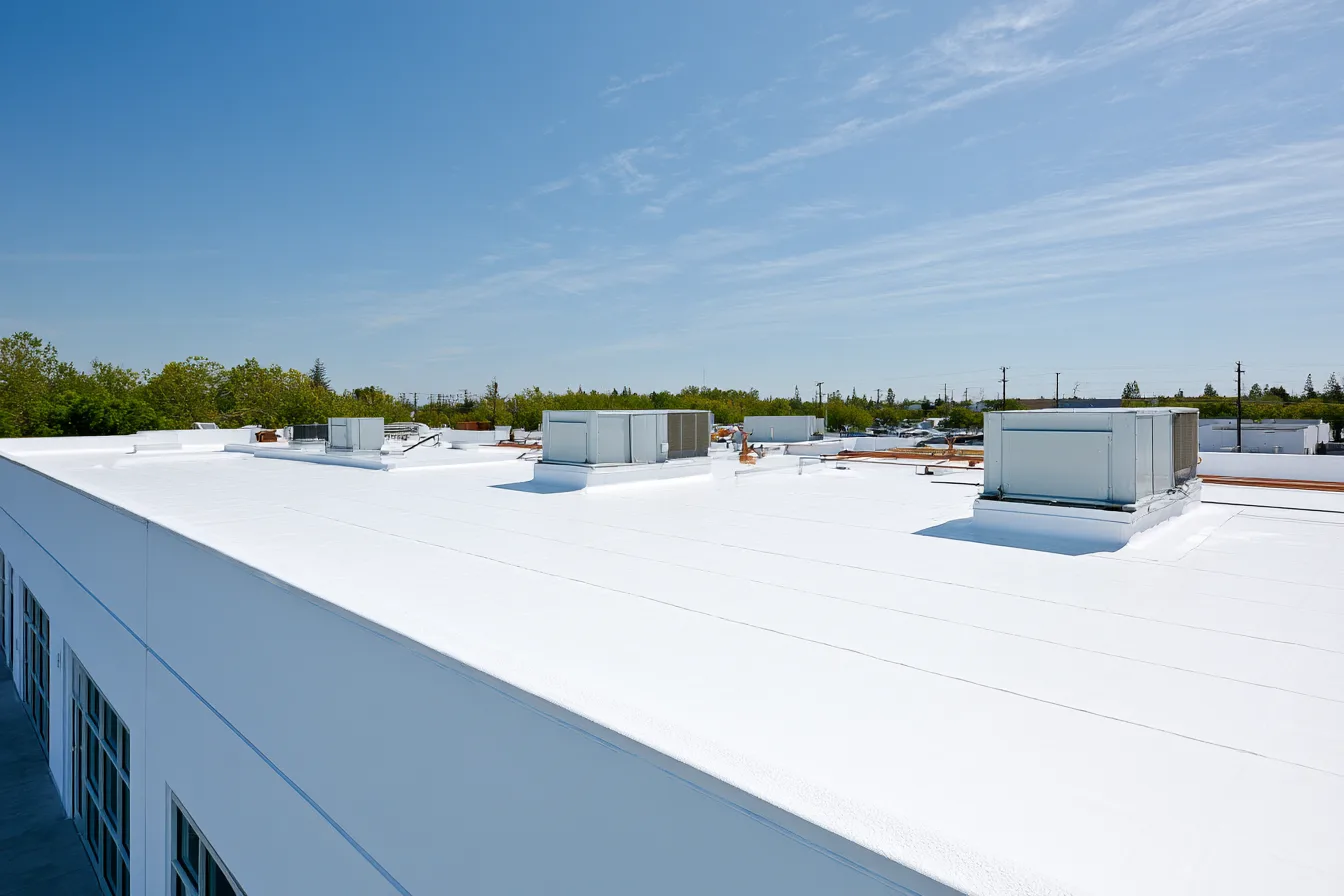
Tell us the building use, roof concern and any access constraints. Start a free inspection request to discuss the appropriate scope.