Drainage design
Review roof slope, drains, scuppers and any taper plan. Simply installing a different membrane does not change the direction water flows.
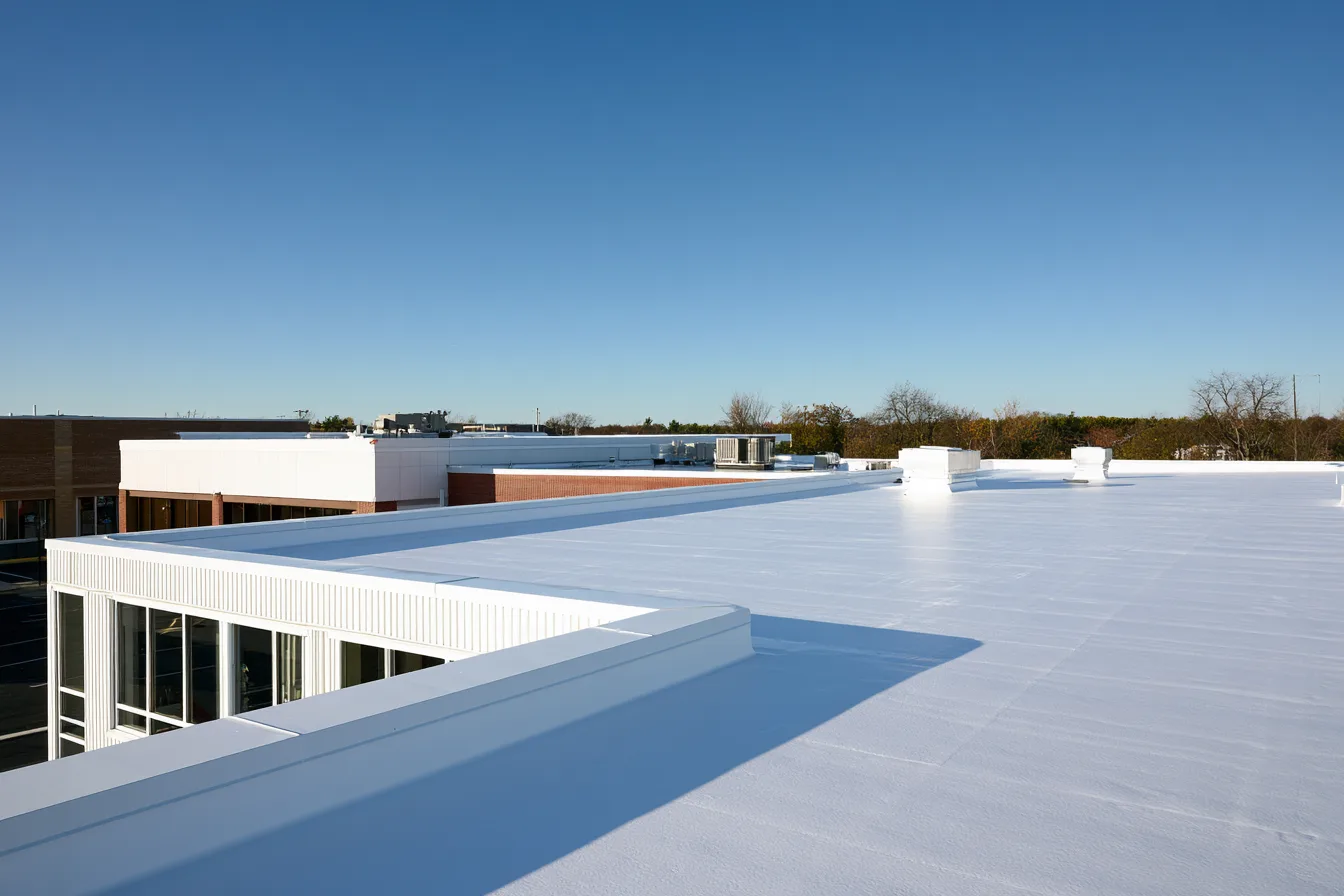
A low-slope replacement is a chance to address wet materials, drainage and roof details together. Request a free inspection to begin planning the assembly.
The membrane is the visible surface of a commercial roof, but the replacement decision reaches below it. Insulation may be wet, deck areas may need repair and drainage may be shaped by several earlier roof layers. A new covering alone does not answer those conditions.
Start with the existing assembly and the building’s operating needs. The scope should explain what will remain, what will be removed and how the roof will stay protected while work proceeds. Those assumptions influence both the cost and the usefulness of the result.
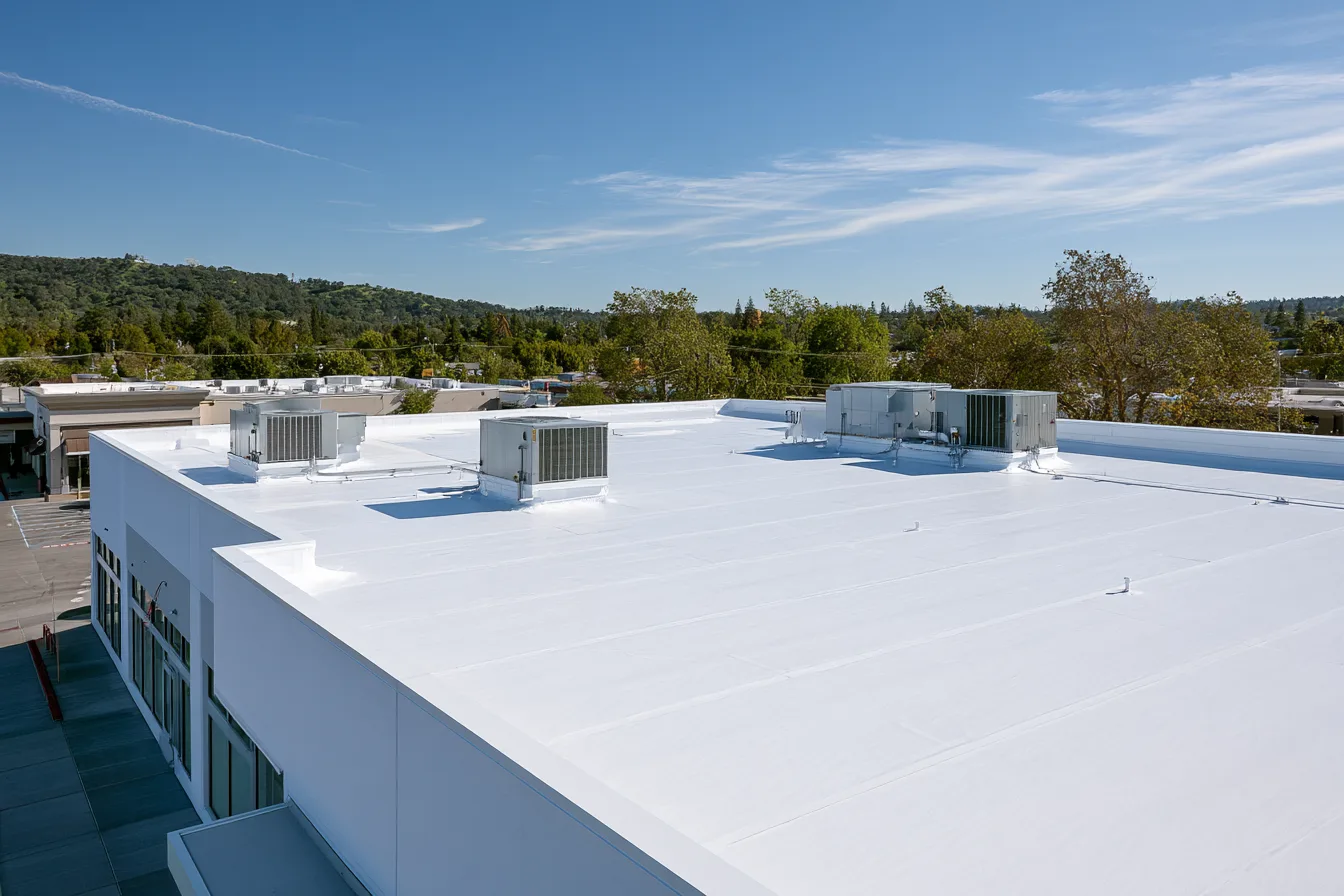
A recover is not automatically permitted because it is faster. Applicable rules, roof condition and the chosen system must support it.
Review roof slope, drains, scuppers and any taper plan. Simply installing a different membrane does not change the direction water flows.
Specify thermal layers and attachment, and define how wet insulation or unsuitable decking will be removed and replaced.
Curbs, penetrations, walls and edges need compatible flashing and coordination with other trades.
Discuss staged work areas, weather exposure and how the occupied building will be protected while the roof is open.
Share delivery routes, sensitive interiors, tenant schedules and roof access needs before the work plan is set.
Assign responsibility for equipment lifting, electrical or mechanical work and other tasks outside the roofing scope.
Discuss staging, removal, drainage checks and the records or warranty documents associated with the selected system.
Low-slope roofs still need a drainage plan. Water should be directed toward appropriate outlets, with the actual slope and drain arrangement established for the building.
TPO is one option, but selection depends on the deck, building use, attachment, details and manufacturer requirements. Start with the assembly rather than a material preference alone.
The answer depends on the roof area, removal, access, weather and equipment coordination. Request a project-specific sequence and discuss sensitive operations.
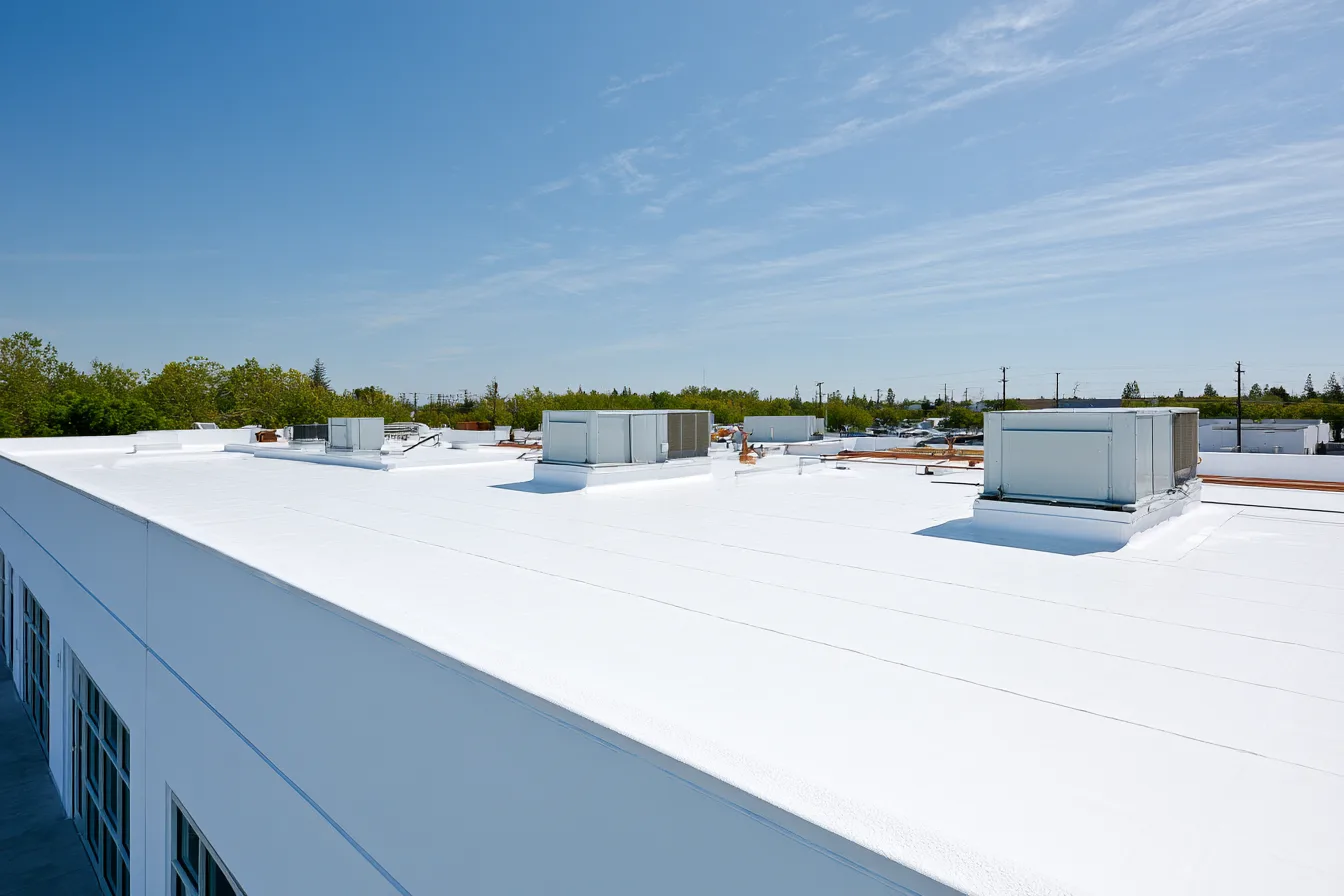
Tell us about the current roof, recurring issues and building use. Request a free inspection to begin the replacement conversation.