Membrane seams
Open or damaged seams can let water into the assembly. The repair method depends on the membrane identification, surface condition and manufacturer instructions.

A recurring commercial leak needs more than another patch at the visible drip. Request a roof inspection and discuss the detail, material and underlying condition.
Water can move through roof insulation, along deck flutes or across a ceiling before it becomes visible. The indoor location is useful evidence, but it does not always mark the membrane opening. A repair starts by connecting the symptom to the roof details and drainage above it.
Document the time and conditions of the leak and whether it began after equipment service or previous roof work. A leak that occurs only during certain weather can provide a different clue from a constant drip. Other sources, including condensation or equipment, may also need consideration.
The goal is a compatible repair that reaches the affected material. Repeated surface patches without understanding the entry point can obscure the detail that needs correction.
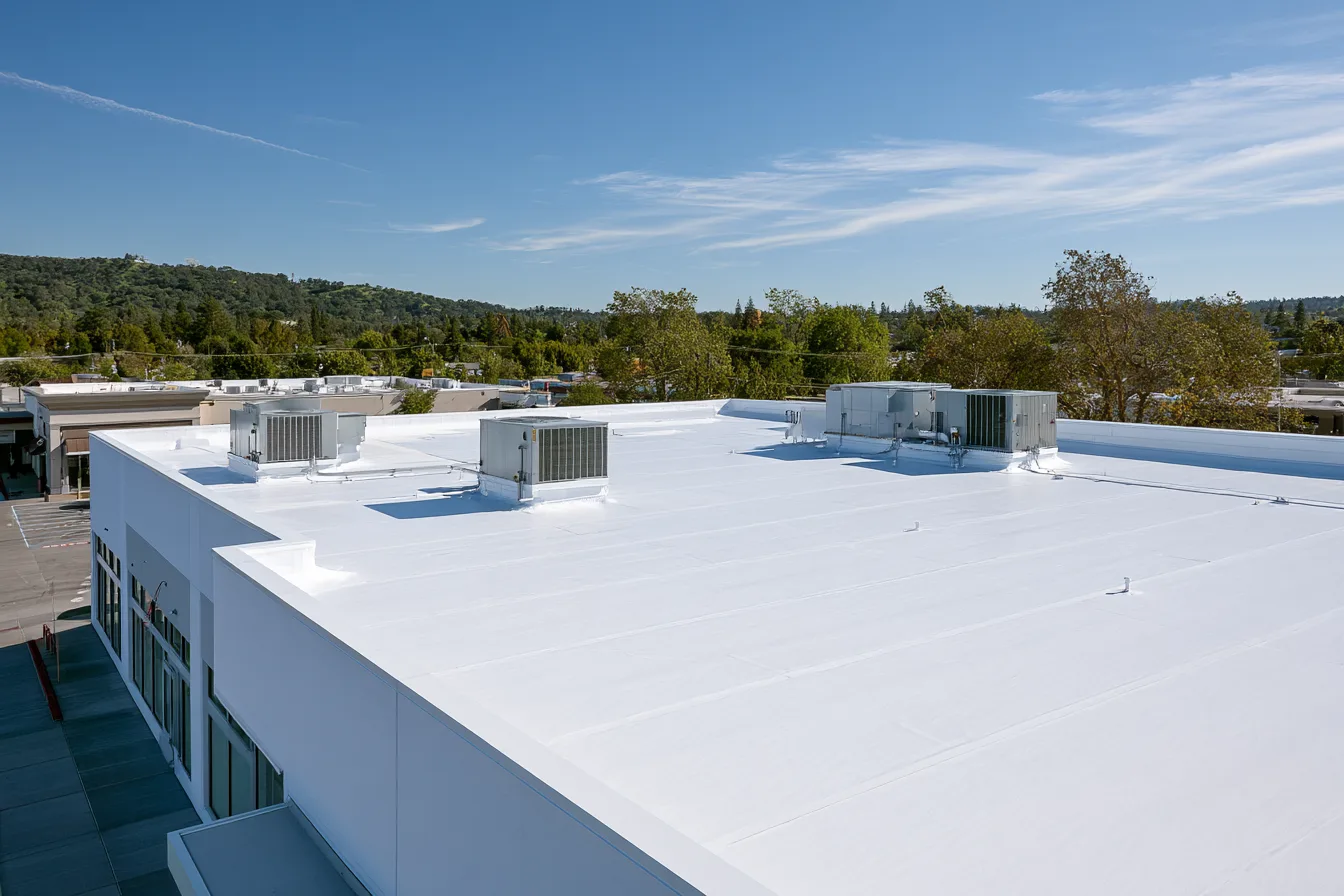
Open or damaged seams can let water into the assembly. The repair method depends on the membrane identification, surface condition and manufacturer instructions.
Movement and concentrated traffic can stress the flashing around equipment. The roof connection and the equipment enclosure may need separate investigation.
Blocked drainage can keep water against vulnerable details. Removing debris is different from correcting a drainage slope or an undersized outlet.
Edges and transitions to walls must remain securely connected. Loose termination or damaged edge metal can introduce water beyond the field membrane.
If insulation or the deck is wet or deteriorated, the repair may need to extend below the membrane. The surface area of a patch is not a reliable measure of the affected assembly.
Share indoor leak locations, dates and roof records. Confirm safe roof access and sensitive occupied areas.
Identify the membrane and failed detail, then establish the affected layers and compatible repair method.
Set responsibilities for equipment, access and temporary protection. Review drainage and the limits of the completed scope.
The original entry point may remain open, adjacent details may be failing, or water may be retained in the assembly. A broader investigation is more useful than assuming each recurrence needs the same patch.
The roof flashing, curb and equipment enclosure can involve different trades. Identify the entry point and agree who is responsible for each part, rather than leaving a gap between the roof and mechanical scopes.
Warranty terms may include notification, approved materials or repair requirements. Locate the documents and ask the issuer what applies before authorizing work that could affect coverage.
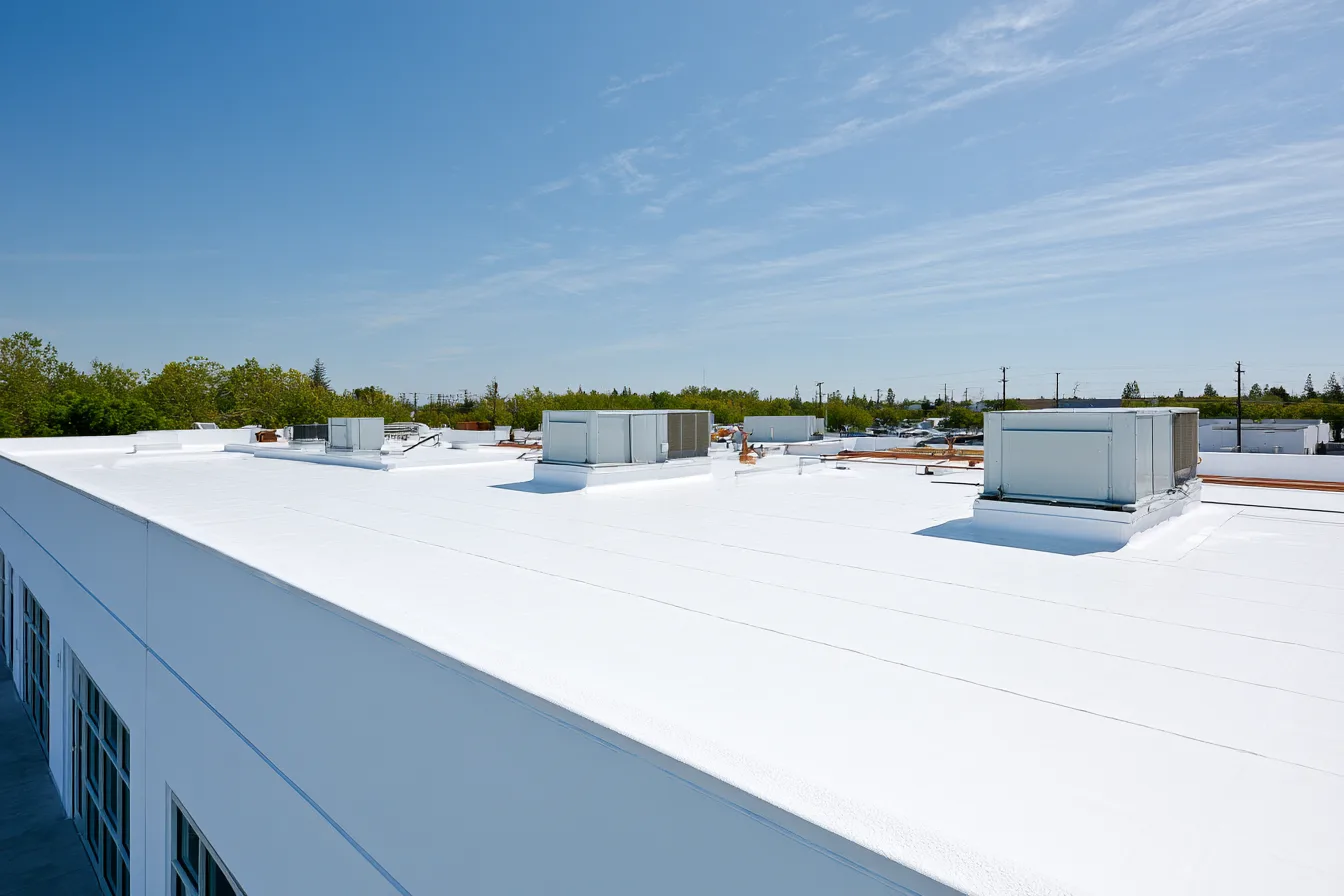
Describe the leak, affected interior area and any recent roof or equipment work. Start with a free inspection request.